British Motor Syndicate
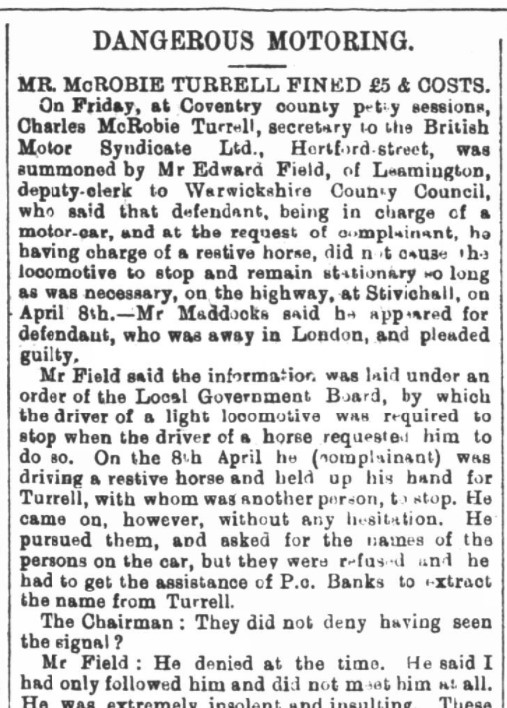
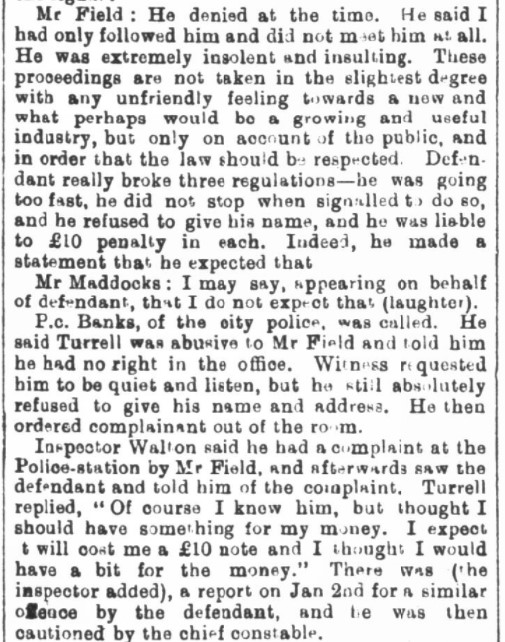
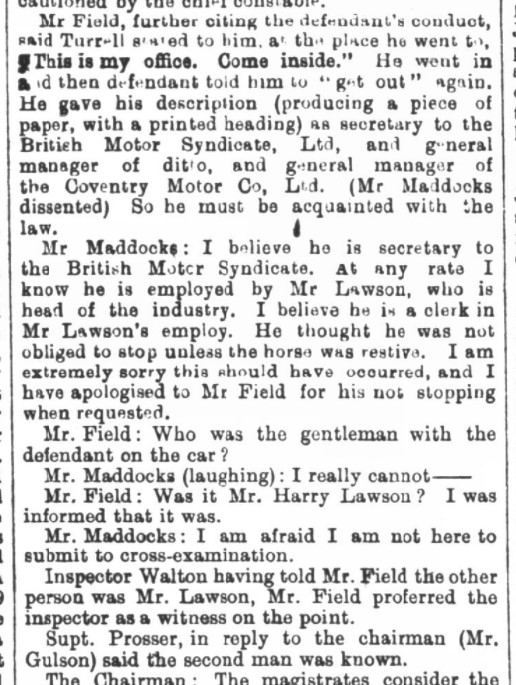
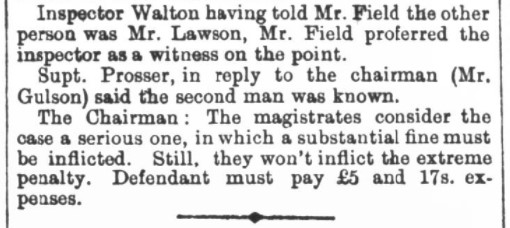
And a flying visit by Mr Harry Lawson and Charles McRobie Turrell.
May 8th 1887.
About the British Motor Syndicate:
From Wikipedia, the free encyclopedia
Henry John Lawson, also known as Harry Lawson,
23 February 1852–12 July 1925 was a British bicycle designer, racing cyclist, motor industry pioneer, and fraudster.
As part of his attempt to create and control a British motor industry Lawson formed and co floated The Daimler Motor Company Limited in London in 1896.
It later began manufactured in Coventry.
Lawson saw great opportunities in the creation of a motor car industry in Britain, and sought to enrich himself by garnering important patents.
In 1895, as one of many attempts to promote his schemes and lobby Parliament for the elimination of the Red Flag Act, Lawson and Frederick Simms founded the Motor Car Club of Britain.
Lawson and the Motor Car Club organised the first London to Brighton car run, the “Emancipation Run”, which was held on 14 November 1896 to celebrate the relaxation of the Red Flag Act, which eased the way for the start of the development of the British motor industry.
Lawson attempted to monopolise the British automobile industry through the acquisition of foreign patents.
He acquired exclusive British rights to manufacture De Dion-Bouton and Bollée vehicles.
He founded a succession of promotional companies including: The British Motor Syndicate, not to be confused with British Automobile Commercial Syndicate Limited.
BMS was the first of many of Lawson’s schemes to collapse in 1897.
Lawson also founded:
British Motor Company
British Motor Traction Company
The Great Horseless Carriage Company
Motor Manufacturing Company
and with E. J. Pennington forming Anglo-American Rapid Vehicle Company.
With his one great success, The Daimler Motor Company Limited, he bought in the rights of Gottlieb Daimler though this company too was to be reorganised in 1904.
After a succession of business failures, British Motor Syndicate was reorganised and renamed British Motor Traction Company in 1901, led by Selwyn F. Edge.

 Motoring History of Leamington Spa & Warwick