Tony Stevens is the most prolific car designer in the history of the Motor Industry and a lot of this was based in Warwick and Leamington Spa.
He came to Leamington first in 1954 at the age of 19 to do a 3-year Student Apprenticeship with AP (Lockhead/Borg and Beck). He had rebuilt an MG M type whilst still at school and brought this with him. His apprenticeship concentrated mainly on production engineering, a fabulous basis for his later design work, as it meant that he never designs anything unless he knows how to make it. As there were only 3 student apprentices, they got to do lots of interesting jobs, and for Tony, this included building the disc brakes for the BRM Grand Prix cars.
In 1957 he went to King’s College, London University to read Mechanical Engineering, securing an honours degree and a diploma in engineering.
In the final year at Kings, Tony worked on a novel type of engine, a rotary engine, which so impressed the Director of Engineering at Rootes that he took Tony on as his personal assistant, troubleshooting the problems he wanted to solve but not feed into the main engineering system.
So, back to living in Leamington.
This work leads to Tony becoming Rootes Chief Engine Designer at the tender age of 25. For the next 18 months, he designed a different type of engine every month. Some were made and the best went into a project called Swallow, which was much too ambitious and was halted; however, he did later come across the engine being made in China. Apparently, the design had gone from Britain to France, to Russia and then to China !!
At this point, Tony’s serious car designing career started in that he thought that a lightweight GT car using the rally-proven Imp engine could win the Index of Performance at Le Mans. Having designed the car, which he called the Desauto Stevens GT, he built it in the garage of his house in Leamington with his own money.
Rootes was getting into difficulty and could not, in the end, afford to take it to Le Mans, nor could Tony.
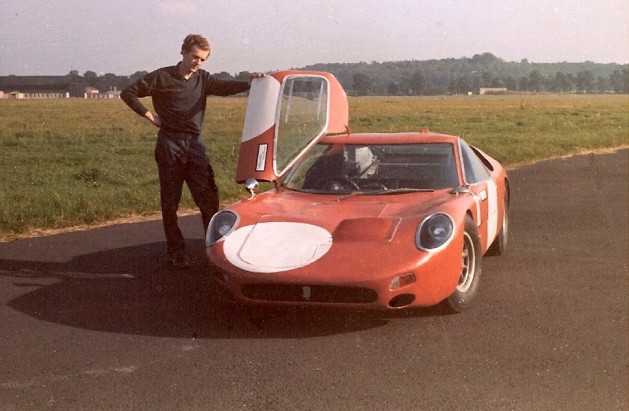
Rootes was concentrating on using the Sunbeam Tiger with an American V8 engine for Le Mans but it had problems, so Tony designed a racing V8 GT Coupe, an outrageous car and as a result, never built.
The Rootes problems got worse and the family wanted to sell up. 25,000 employees, factories all over the country and no future products, so no one would buy it.
It was decided that a new range of cars was needed urgently and Tony got the job of creating it.
A full range of cars, 18 months and a very limited budget.
The range Tony created was called the Arrow range and included the Hillman Hunter which then went on to win the first London to Sydney marathon.
Tony planned and controlled every element of the business, engineering, design, manufacturing, marketing and finance.
He brought the Arrow range in on time and on budget and it then attracted buyers for the company which was sold to Chrysler and the jobs were saved.
Exhausted by this Tony moved into the glass industry as head of planning for Pilkingtons, but friends kept saying “you have created cars which have been successful in all world markets and made others rich, do it for yourself !”
So, now living in Warwick Tony rented a factory from Eagle/Dennis, designed some vintage style delivery vans to support the “we still make it like in the old days” marketing for bread and all sorts of other products and started production. Some 50 vans were made but they were so distinctive that they never reached the volume which was anticipated.
In lieu of rent one month he designed a new fire engine for Eagle, which went into full production.
An aside was converting a Jaguar E-type 2-seat convertible into a full 2+2 seat convertible.
The factory was then used to make special trailers for a number of clients, resulting eventually in the Space Trailer design, which was then copied by other manufacturers and has sold well for them ever since.
Tony then moved to a factory outside Leamington, where many specials were designed and made, including a 20s style Taxi for promoting the United Biscuits Taxi brand.
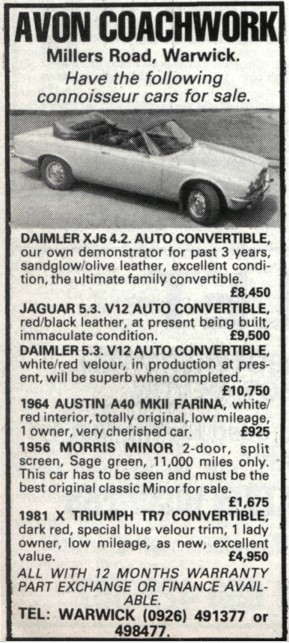
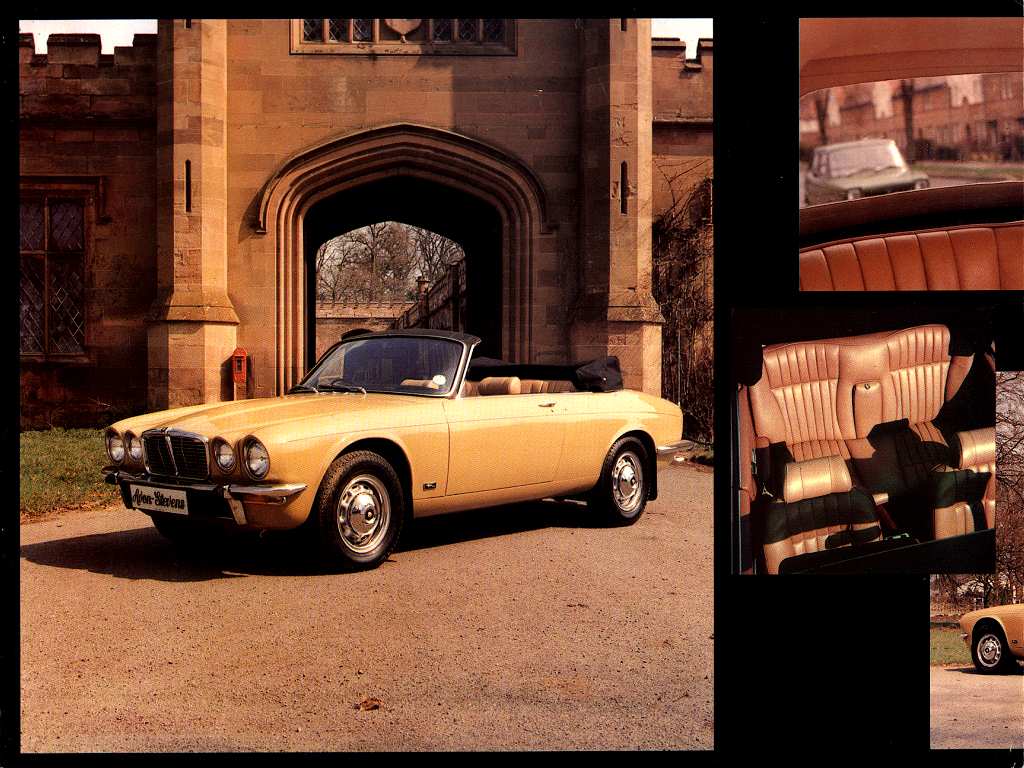
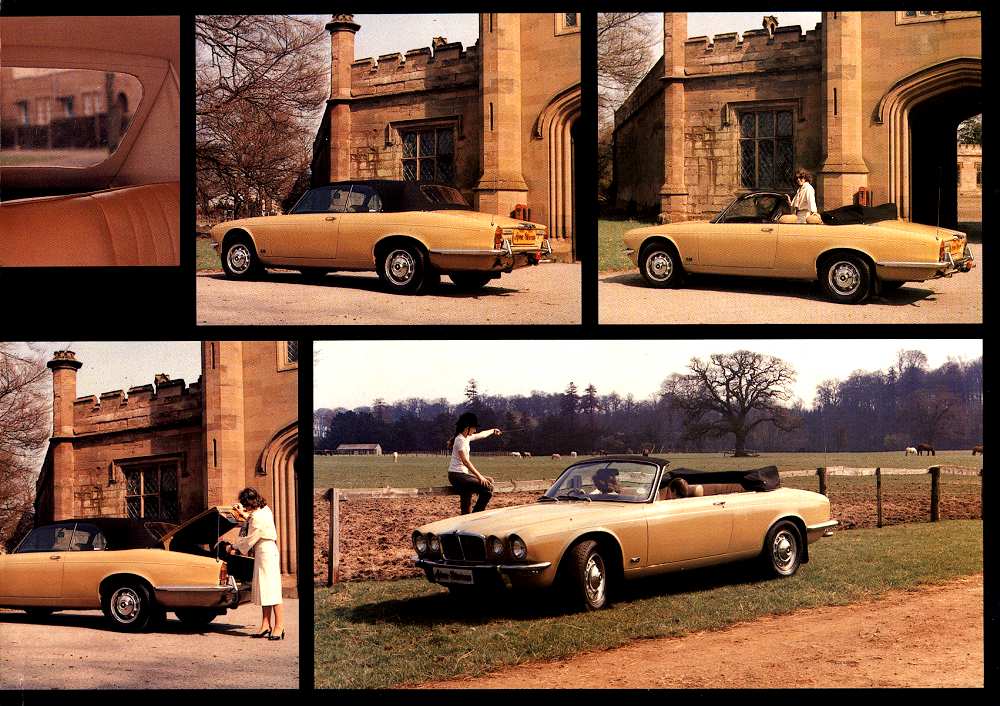
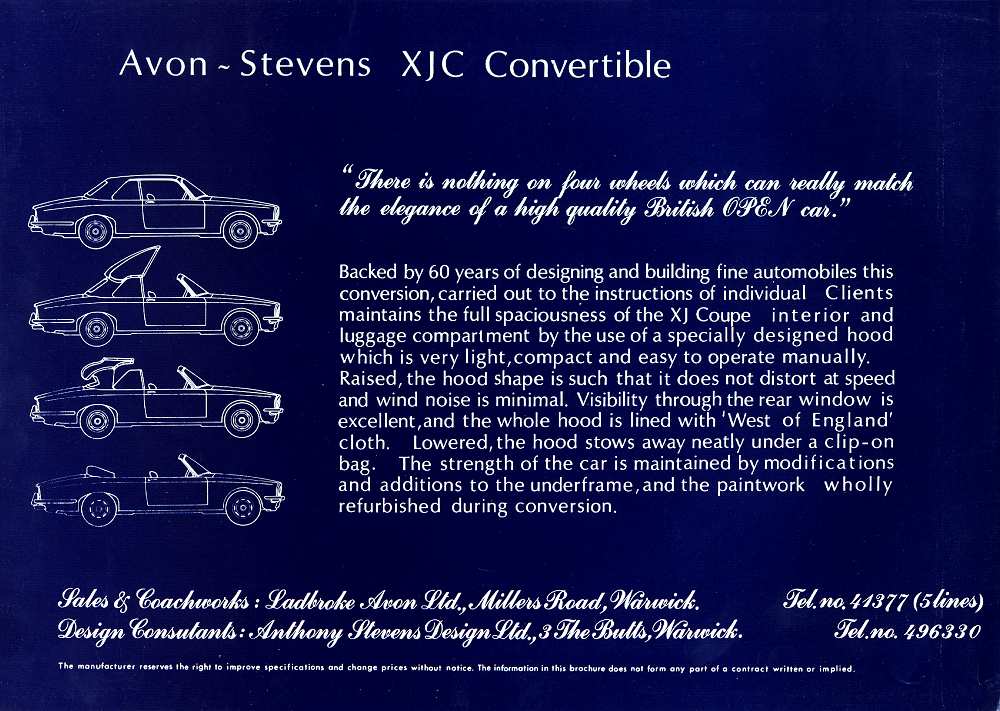
Back in Warwick, Tony was asked by an old client to create a large open British car and chose the Jaguar XJC as the basis. He showed the design to Graham Hudson, who then owned the Avon Coach Building business in Warwick, and a partnership was formed, which resulted in 50+ of these cars being made. This then led to Tony designing an Estate Car version of the same Jaguar, which Graham then made another 50+ examples. He also designed a stretched open Range Rover for an Arab Sheikh to go hunting with his Hawks!
All along, Tony was keen to get back to the high-volume mass production car world and headed for a long-held ambition to make a new British sports car. Influence from the banks pushed this towards a Morgan type of car, and Tony designed and made a 2-seater called the Stevens Sienna. This was very well received but was not what he really wanted to do, so set about designing a new serious sports car. He wanted this to be as British as it could be so chose the Reliant Kitten components as a base.
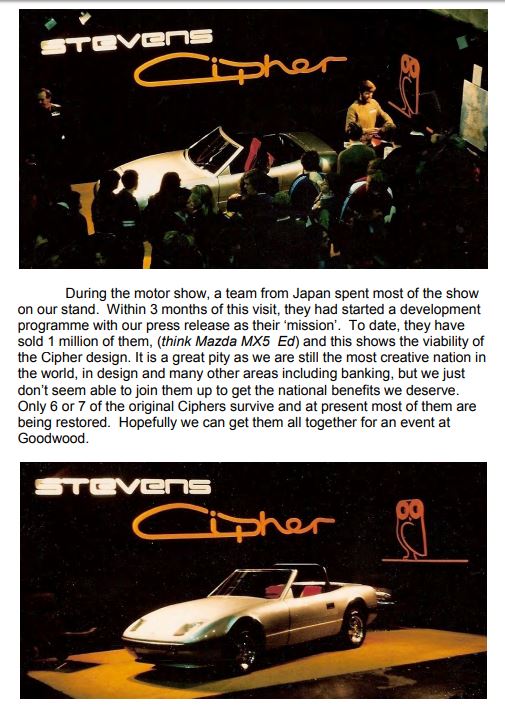
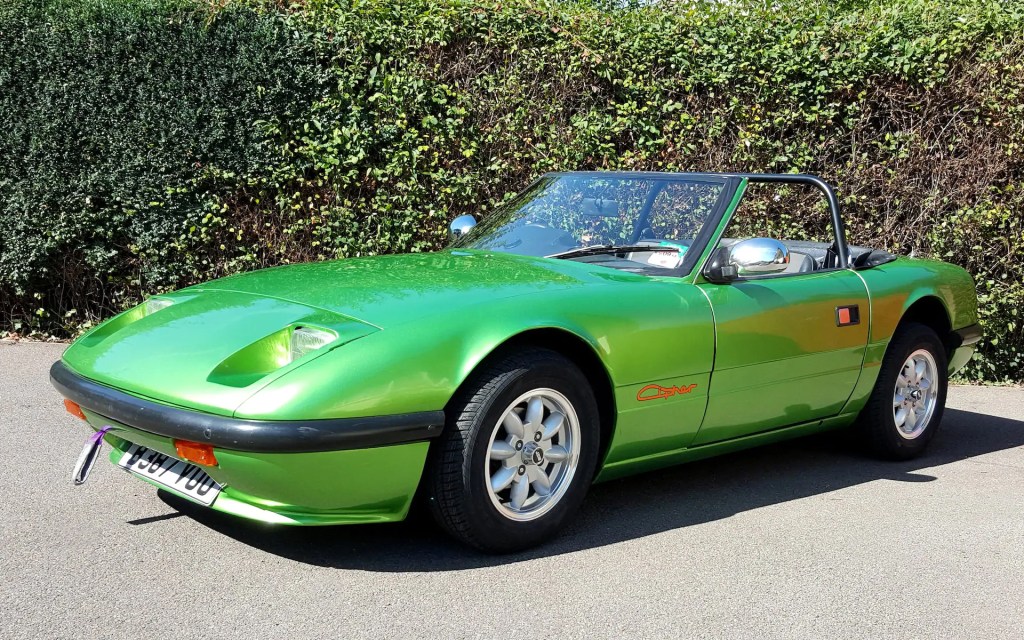
The result was the Stevens Cipher.
The Cipher was launched at the 1980 International Motor Show at Birmingham NEC to huge acclaim, from the press, the dealers and the public. A few were made, but the City would not back Tony’s plans for high-volume production, mainly because of the bad taste left by the De Lorean affair.
Tony then declared “we are the best designers in the world, so if the City will not go with us because of the huge up-front investment required for mass production with conventional technology, I will create a way of designing cars for mass production without the up-front £billions”.
Somehow, the Chinese Government, which was trying to recover from the devastation of the Cultural Revolution, got to hear about this, and the message came back, “We have lots of people, but no money, come and teach us how to design cars for mass production for world markets”. This resulted in many trips to China, backed by Michael Edwards, chairman of British Leyland, who supplied senior executives as Tony’s team saying “China is the future and this is an opportunity for my people to get into China and make contacts”.
Following this Tony was approached by Will Corry from Northern Ireland, who had just bought the Davrian (Welsh) sports car company, to design a new car. This then progressed in Warwick with the all-composite Cultra sports car. As soon as the prototypes were running well, the whole business moved to Northern Ireland. Tony set up a production unit there but Will was more interested in rallying than production and the project failed.
Then came Russia, joining forces with the TKM international car distribution company.
A new version of the Cipher sports car but with a Lada engine.
This was a very good idea for the USSR as it tied Lithuania into a production deal with Russia, with design in Leamington and prototype built by Tony in Stratford and international sales through TKM.
Sadly ‘glasnost’ then came along and the Lithuanians refused to continue working with the Russians.
Next came a partnership with Peter Davies in a company called Artec in Corby to use the new Stevens design system to create a range of cars for the Caribbean, based in Jamaica. Various leisure cars and taxis were made and demonstrated to great excitement in Jamaica.
Tony then designed for Artec, the Didi City car using FIAT engine and components.
Tony said, we should have taken this forward to production. Very silly, big regrets.
While with Artec Tony designed a classic style Grand Prix car for Tom Wheatcroft who owned Donnington race circuit. A number of these were made and raced.
MOTORSPORT MAGAZINE (The month in Motorsport May 1993
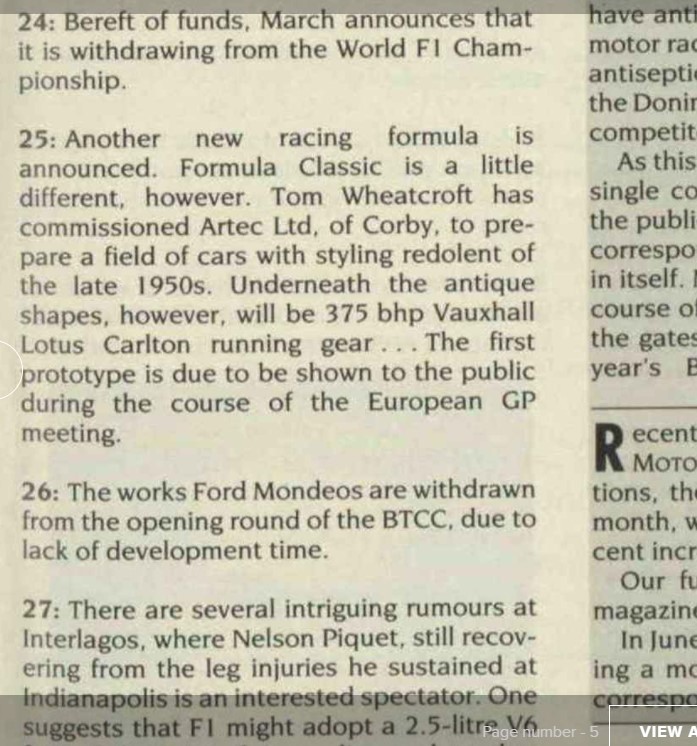
https://www.motorsportmagazine.com/archive/article/may-1993/4/month-motor-sport
Now to Malaysia and Tony designed and various Leisure cars and also a new version of the Cipher sports car using Proton/Mitsubishi engine and parts. This was intended to extend the Proton range for high volume worldwide sales. The Malaysian economy went down a hole and the project with it !!!
Tony then went back to the Didi project and his experiences in China and produced a new range of ultra-simple cars and light vans etc. The intended market was for developing nations as a first/basic transport, to be assembled locally by the people who were going to use them.
This design has evolved to become a basic electric car and van for all world markets and he is currently in discussion with the Government and the City to take it forward as a new British-owned British-based major international car company.
Good luck Tony,
We look forward to the next chapter.
 Motoring History of Leamington Spa & Warwick